



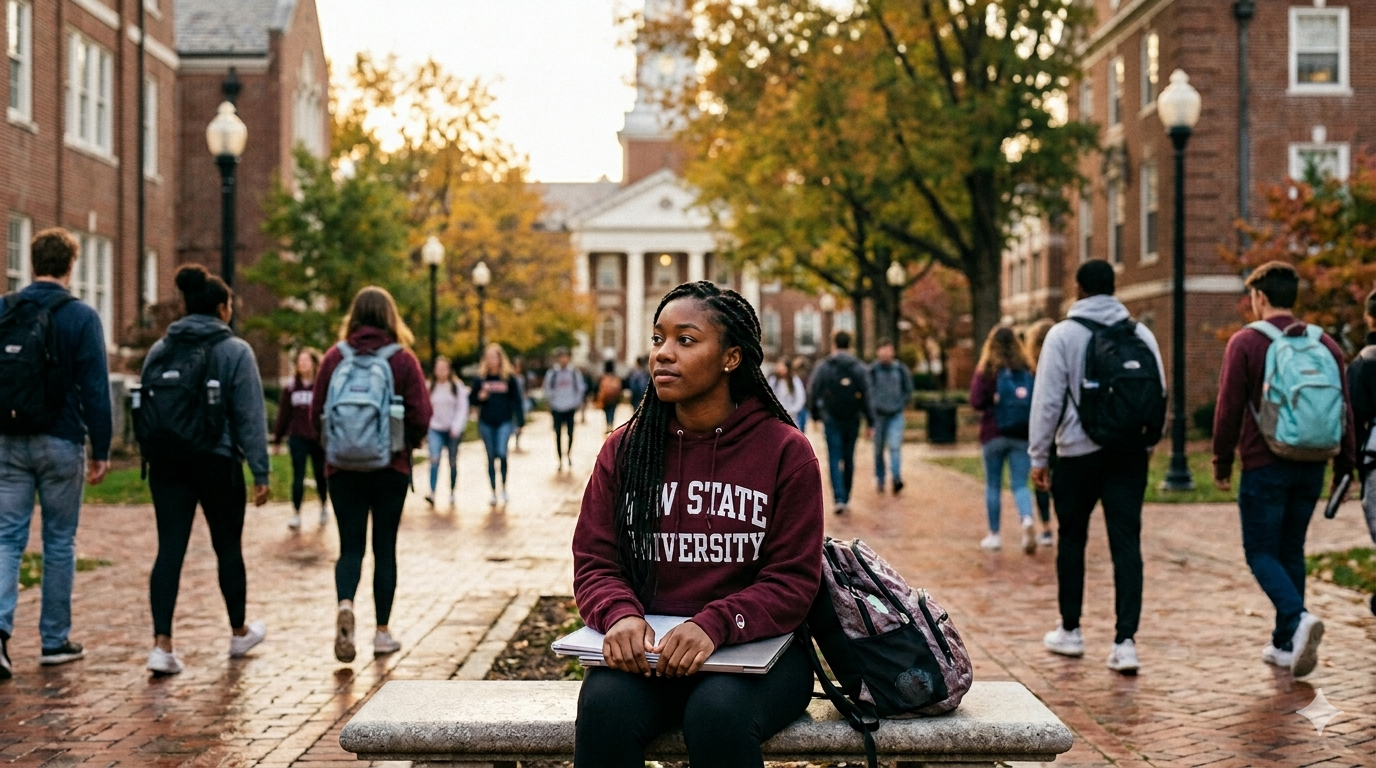
For many students, getting accepted into college is celebrated as the finish line. For Black students—especially first-generation—it’s only the beginning of a much more complex journey.
Over the past few decades, college access has improved, and more Black students are enrolling than in previous generations. Yet Black students still have lower completion rates than their peers, even when they start at the same types of institutions. National data show that Black students at four-year colleges are significantly less likely to graduate within six years than white students, despite comparable aspirations and effort. That gap doesn’t come from a lack of ability—it comes from the conditions students are navigating once they arrive on campus.
Many Black students enter higher education dealing with financial strain, limited academic support, and environments where they may feel isolated or overlooked. Even when students receive financial aid, it often doesn’t fully cover the true cost of attendance—things like housing, food, transportation, technology, and emergencies. A large share of Black students work while enrolled, and many work more than 20 hours per week, which research shows is associated with lower persistence and higher stress. It’s hard to focus on a chemistry test when you’re wondering how to pay for next semester—or next week.
Academic expectations also shift dramatically from high school to college. First-year students are expected to adapt quickly to faster-paced courses, heavier reading loads, and very different grading standards. But the systems that help students adjust—academic advising, success centers, tutoring, writing help, and early-alert programs—aren’t always designed or communicated with Black students in mind. Some students never get invited into those spaces; others don’t realize they exist until they’re already in crisis.
For first-generation students, there’s an added layer: they’re learning an entirely new culture and vocabulary in real time. Terms like “office hours,” “credit hours,” “registrar,” or “co-op” may be second nature for students whose families went to college, but deeply unfamiliar for those whose families did not. Studies consistently show that first-gen and low-income students use fewer campus resources, not because they don’t care, but because no one clearly shows them how—or because they worry about being judged for asking “basic” questions.
And then there’s the emotional weight. Black students often report higher levels of racial stress, feelings of isolation, and experiences with bias or microaggressions in and out of the classroom. Many also feel pressure to “represent” their families or communities, to succeed without making mistakes, and to make their degree “worth it” for everyone who sacrificed to get them there. That’s a heavy load to carry while trying to learn organic chemistry or write a capstone paper.
This is where organizations like DAAP step in—not just to help students get into college, but to stay, succeed, and graduate with confidence. DAAP’s support recognizes that the problem is not individual motivation; it’s the systems and gaps students are navigating. By combining financial assistance, mentoring, resource navigation, and community, DAAP helps Black students move from surviving semester-to-semester to building a sustainable path to graduation.
Access matters. But support, strategy, and community are what turn access into achievement. Getting in is a milestone. Staying in and finishing—well, that’s the real win.