



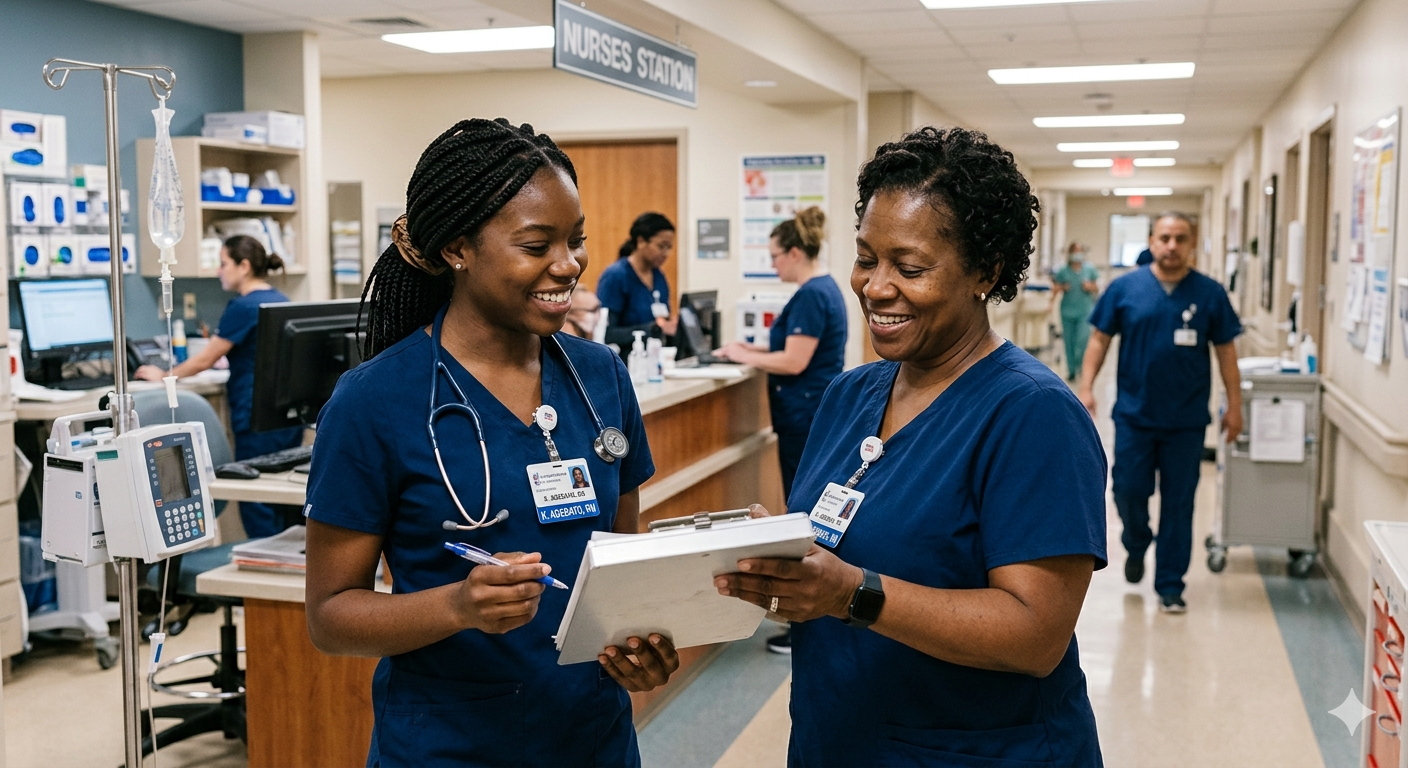
Behind every nurse is a story of persistence, sacrifice, and resilience — especially for Black students entering the field.
Nursing is one of the most respected and in-demand professions in the country. Workforce projections consistently show a need for hundreds of thousands of new nurses over the next decade as the population ages and healthcare needs grow. At the same time, Black nurses remain underrepresented in the profession compared to the share of Black patients and communities they serve. That gap matters: research connects diverse nursing workforces with better communication, patient satisfaction, and outcomes in communities of color.
The path to becoming a nurse is anything but easy. Students face rigorous academic expectations, including high-stakes science courses and competitive program admissions. Once admitted, nursing students juggle demanding clinical hours, skills labs, and exams that require both technical knowledge and critical thinking. Many also work to support themselves or their families; nursing students often log more weekly work hours than their non-nursing peers, adding another layer of fatigue and time pressure.
Financial pressure is a constant theme. Nursing programs frequently come with additional costs—uniforms, equipment, transportation to clinical sites, licensing exam fees, and prep courses—that are not fully covered by traditional financial aid. For Black students, who are more likely to come from households with less generational wealth, those costs can be a serious barrier to staying enrolled through graduation and licensure.
For Black nursing students, representation also matters deeply. Studies show that Black students in health professions report greater confidence and persistence when they see faculty, preceptors, and practicing clinicians who share their background and understand their experiences. Conversely, being the only Black student in a cohort—or one of a small handful—can intensify imposter syndrome and feelings of isolation. In a field that deals with life and death, mental and emotional strain have real consequences.
This is why National Nurses Week (May 6–12) is more than a celebration of those already in the profession—it’s a moment to reflect on the pipeline and who is being supported along the way. If we want more Black nurses at the bedside, in advanced practice roles, in leadership, and in policy, we have to invest early in Black students who are still in high school, pre-nursing tracks, or the first years of their programs. That means accessible advising, transparent information about prerequisites, academic support for tough gateway courses, and financial help targeted to those who need it most.
DAAP recognizes that supporting future nurses starts long before graduation. It starts with access—helping Black students see nursing as an attainable, impactful career path. It continues with preparation—equipping them with the study skills, time management tools, and mentors they need to get through some of the most demanding coursework in higher education. And it includes sustained guidance—being present semester after semester, not just at admission or at the pinning ceremony.
When we invest in students today, we strengthen the future of healthcare tomorrow. Every Black nursing student who is supported to cross the finish line brings lived experience, cultural understanding, and a commitment to care that our healthcare system desperately needs.